Showing posts with label ecology. Show all posts

Saturday, 21 May 2016

Rhododendron - The Truth


Back once again with the renegade master. Or rhododendron again. The same woods that would take about twenty minutes to amble through, that we have been working in for a good eight days now.

Not that I'm complaining, I am getting paid for those eight days after all so, from a very self-centred point of view, the more the merrier. However I feel I should add some more detail about the rhododendrons themselves, after doing a little research on them.

You see, previously, my source material had been mostly hearsay, with the bit about rhodos coming from Nepal being sourced from reading Tintin In Tibet when I was twelve. 
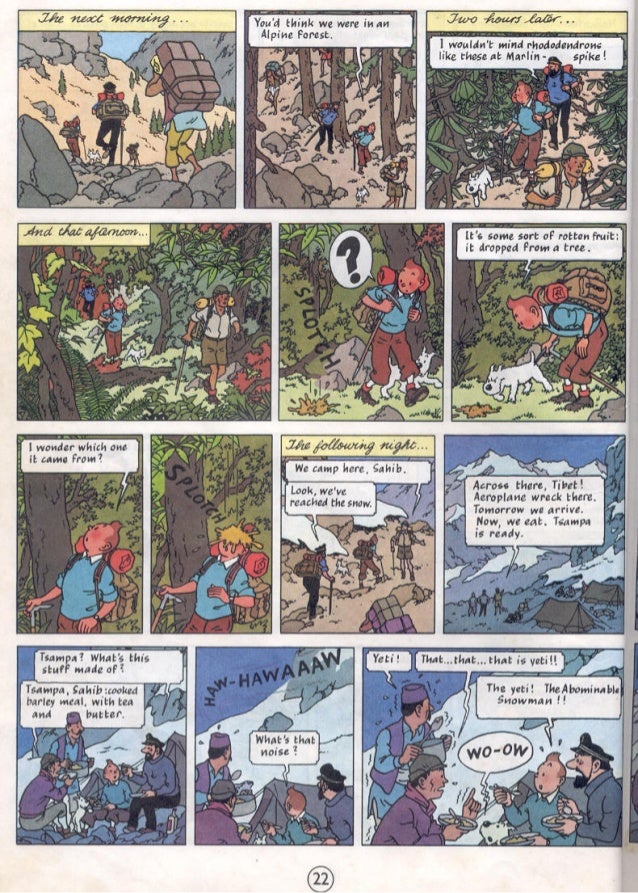
Now Tintin is great as I'm sure you'll agree but, a source of cutting-edge botanical knowledge it is not. In fact, it turns out that Rhododendron ponticum is a native to Spain and Portugal,  and it was from there that it was introduced to Britain in the 19th century. 

The problems with Rhodo are twofold - firstly, it spreads. It branches out from a central core, and then, wherever it touches the ground, a new bush sets root. This is a thing called asexual reproduction and is definitely not confined to Rhododendrons. As an aside, this means that, when you see a wood thick with rhododendron, it is probably all the same plant, i.e. the same plant making genetically identical clones of itself. Annoyingly, as well as this, the plant can reproduce sexually, with the large pink flowers that are in bloom this time of year being fertilised by bees and then producing seeds, which are blown on the wind and sprout from where they settle. I have seen a garden in the outer Hebrides in Scotland - which is just the sort of poor, acidic soil that rhodos love - with a single rhododendron bush in the garden and then a perfectly tear drop-shaped bloom of windblown rhodo saplings growing in the moorland, downwind. 

This in itself is not such a problem. There are plenty of species that are a pest - or a complete thug from a gardening point of view - but still part of a healthy ecosystem. Brambles and nettles spring to mind. However, wherever rhodo establishes itself, it will shade out the ground underneath, meaning no light will penetrate to the ground layer and allow anything else to grow. As well as this, the leaves contain a poison that prevents them from being eaten by anything and, when the leaf falls off the plant, drops to the ground and forms a poisonous leaf litter that prevents anything else from growing.
Going back to nettles and brambles, both of these plants are food species for caterpillars but, as we just mentioned, rhodo is a food plant for nothing at all. 


All great so far for the rhododendron. Then, along we come with our chainsaws and glyphosate and our attempts to redress the matter. The first stage is the fun bit - getting out their with chainsaws and cutting the living heck out of the stuff. However, as mentioned, this in itself is not enough. This is not a thing peculiar to rhododendrons. Many plants can be cut down to the base and will bounce back repeatedly, as any gardener knows. Grass is a fairly obvious example of this phenomena. Plants are a complicated system, involving water being sucked from the ground up to the leaves, where they use sunlight to combine the water with carbon dioxide in the air and produce sugar. Or starch, which is a more complicated sugar molecule. This sugar is stored in the roots so that when some guy or gal with a chainsaw chops the plant down to the root, the stored sugar gives enough energy to start sprouting leaves again. 
The deal, as mentioned a couple of weeks ago, involves us chopping down the rhodo and then leaving it for a few years (literally one or two years) and then zapping the new growth with weedkiller. We were using glyphosate. According to the blurb: "Plants absorb glyphosate through their leaves and other green parts. From here, the glyphosate moves to the growing points of shoots and roots, where it interferes with the enzymatic production of certain amino acids that are essential for plant growth."
So there you go. It's bad news if you photosynthesise but generally fine if you're anything else. But still, we do have to hit everything hard as, if you miss a bit, it'll still be there, laughing at you for years to come.  Which is bad from an ecological point of view although, arguably, good if you're a contractor, specialising in it's removal.
Brownsea island recently announced the complete eradication of rhododendron on the island. By my reckoning, it won't be eradicated from cannon hill woods for a good while to come...

For your further reading:

Precisely why rhodos are evil:
http://www.glyphosate.eu/glyphosate-basics/how-glyphosate-works

Eradicating rhododendron from Brownsea Island


Friday, 13 May 2016

Rhododendrons And Me Part 3


Day six of our rhodo bashing - or day four of the weed-killing part of it. And, after nearly being destroyed by two days of actual work after eight months of lounging around at college, this week was considerably kinder on my shoulders. The spray tank hadn't gotten any lighter, but a weekend spent mostly lying around and eating (recovery, in sporting parlance) had allowed some muscles to grow back on my shoulders.

There was still the getting covered in blue dye part of the activity, which is getting to be a bit of a pain in the arse. The tank is full of a mix of round up weedkiller, 'formula b', which is to help the roundup stick to the rhododendron's waxy leaves, water and a blue dye. The dye is so that you can tell what you've hit and what you haven't which, in the middle of a a very dense bit of woodland, comes in very handy indeed. However, despite wearing a white pesticides boiler suit and rubber gloves, manages to get all over you. At the end of the day, we were joking that, by the end of next week's session, we'll be looking like a pair of smurfs.

Getting back to the 'dense woodland' part of proceedings, the area we are zapping was once plantation woodland. I'm making an educated guess about the history of the place but I reckon that, having previously been heathland, it ploughed up and planted up with conifers, with drainage ditches being dug. Those conifers have since been cleared and birch woodland was then either planted of allowed to grow up of it's own accord, which is what is now on the site. As well as the rhododendron, obvs.

If the picture below, we see exhibit A, which is a latex glove that has been placed over a sapling some years ago and that sapling has since grown into a tree with a latex glove still wrapped around it.


Kinda like one of those environmental memes about pollution only a bit more slapstick. I also found a very old jumper that had used to belong to an employee of the forestry commission. I didn't find the remains of it's owner anywhere nearby, so have to assume that he left it there.

In years to come, the next bunch of mugs contractors sent in to zap the next sprouting of rhododendron will probably find ripped arms and legs from our spray suits, which did not stand up very well to a day's tramping through the undergrowth. That's kind of why we're all blue now but I digress.


Tuesday, 26 April 2016

Bring Me The (Soil) Horizon

We were doing a woodland survey today, as a college thing (I'm a student at the mo). As I'm sure you will be aware if you live in the UK, there's been a bit of a cold snap this week.

We did three quadrants (or squares), each of 100 square metres (10m x 10m), with two 1m square patches randomly chosen in each. The larger quadrants were chosen not entirely randomly but more by where there were the fewest trees to get in the way. Then there was the actually quite simple way of measuring out a perfect square via trigonometry or something, which was made considerably more difficult by the aforementioned trees, which managed to get in the way all the same. Then there was the fact that no one quite remembered how to do it but, after few false starts, we got our quadrant marked.

At least once during the measuring and the recording, there was a brief hail storm. Not entirely unusual for southern England in April but, still, not especially welcome. As the second was being measured out and recorded, I was sampling the soil, which is basically a posh way of getting your hands covered in mud. You stick an auger in to take out a soil sample, ideally all the way into the soil and not onto a root a few cms below the surface. Then you look at it, think 'yup, that's soil all right' then get you test for 'soil type'. This involves damping it and then rolling it between your fingers into a ball and then a sausage shape and then into a crescent. There's basically a whole load of shapes and the shape that your soil fails to make defines what it is. In this case (and pretty much as I'd guessed before I'd even touched the stuff) it was sandy clay loam - sort of brick red and unable to roll into anything beyond a short sausage.

By the time we'd tested soil pH (5), the second quadrant had been surveyed and the occasional hail had now turned into actual snow. The third quadrant was set up in a manner of minutes in this sleety snow and then surveyed with equal vigour. 'Bluebell', 'tick', 'brambles', 'tick', 'celandine', 'tick'. 'Coverage?'...'Uhhhhhhhhhh... 26-33%?', 'yeah, pretty much'.

Then, clipboards, marker poles and all the other gubbins were gathered up and carried at a canter to a nearby café, with thunder rolling round the blackening skies above us. In the dry, we compiled notes and thawed our hands out.

I have always been a little sceptical of nature surveys, largely for the scenes described above. Many may well be conducted with full scientific rigour and by experienced and dedicated professionals. Others, however....

A 'soft science', I think they call it. Or maybe just the most objective way of measuring a very complex system that anyone has yet managed to come up with.

On the plus side, the sleet washed the mud off my hands so, you know, all's well that ends well.