Showing posts with label countryside management. Show all posts

Tuesday, 5 July 2016

Bring Me The Soil Horizon

Up at my Mother-In-Law's place, there's some construction work going on, shoring up the house next door or some some such. We went to have a look at and there, where the soil had been dug away, was another of those wonderful times that the text book description that you've been looking at in various books for years is perfectly rendered in real life. In this case, a perfect example of soil horizons.

Here's the text book version:

And here's the real deal:


So yeah, looks like a load of dirt, huh? Well, on the top layer is, ya know, grass and stuff and you don't have to be a biologist to know that grass 'and stuff' is organic. Organic - i.e. living - matter dies and then decays, being broken down by microbes and fungi and stuff. This creates what gardeners call a 'rich humus', which is kind of food for plants. Not hummus, that's food for vegetarians.

Anyway, from the bottom of the picture up, is the underlying rock, which is chalk and is fairly typical of the south of England. Chalk is basically dead sea shells, built up over a very long time and is alkaline, if you remember the post I made a couple of weeks ago attempting to explain acid and alkaline soils: http://punkrockecology.blogspot.co.uk/2016/06/orchidorama.html 

Also, it doesn't hold water very well, as we can see as the darker brown soil at the top washes out very quickly to light brown and then the pure white of the chalk. This creates the alkaline and not very fertile chalk downland that I also attempted to explain here: http://punkrockecology.blogspot.co.uk/2016/06/over-hills-and-far-away.html


If you're a gardener, or a farmer, or indeed if you're a plant, then there is a 'perfect' soil, which is called loam and is a rich dark brown, very mildly acidic and a mixture of clay, sand and silt. Rusty coloured soil, incidentally, is coloured that way precisely because it is full of tiny particles of ferris oxide, or rust, and this rust is an indication of air and water being able to penetrate deep into the soil. White soil, grey soil and black soil (the latter being peat soils, such as that described in 'Orchidorama') show the opposite of this, usually that the iron and everything else is being washed away or that air is not able to penetrate.

If ya wanna get even more geeky, then look up 'munsell soil colour chart', or have a look at the following links:

Soil types explained for gardeners: https://www.rhs.org.uk/advice/profile?PID=179

A very tech description of soil horizons: http://passel.unl.edu/pages/informationmodule.php?idinformationmodule=1130447025&topicorder=4

Or you can just slack off and watch this. I like it. It's got a citroën van in it.


Saturday, 21 May 2016

Rhododendron - The Truth


Back once again with the renegade master. Or rhododendron again. The same woods that would take about twenty minutes to amble through, that we have been working in for a good eight days now.

Not that I'm complaining, I am getting paid for those eight days after all so, from a very self-centred point of view, the more the merrier. However I feel I should add some more detail about the rhododendrons themselves, after doing a little research on them.

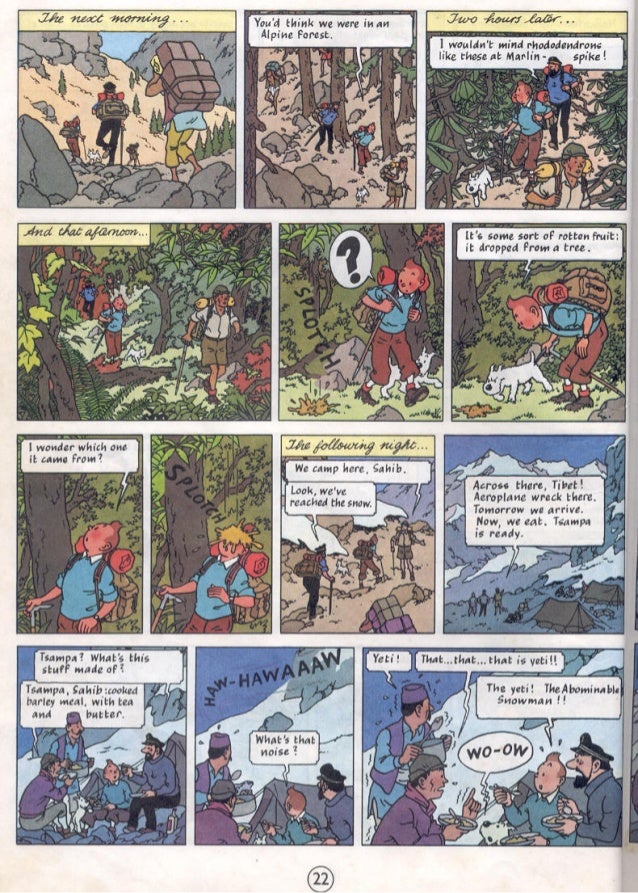
You see, previously, my source material had been mostly hearsay, with the bit about rhodos coming from Nepal being sourced from reading Tintin In Tibet when I was twelve. 

Now Tintin is great as I'm sure you'll agree but, a source of cutting-edge botanical knowledge it is not. In fact, it turns out that Rhododendron ponticum is a native to Spain and Portugal,  and it was from there that it was introduced to Britain in the 19th century. 

The problems with Rhodo are twofold - firstly, it spreads. It branches out from a central core, and then, wherever it touches the ground, a new bush sets root. This is a thing called asexual reproduction and is definitely not confined to Rhododendrons. As an aside, this means that, when you see a wood thick with rhododendron, it is probably all the same plant, i.e. the same plant making genetically identical clones of itself. Annoyingly, as well as this, the plant can reproduce sexually, with the large pink flowers that are in bloom this time of year being fertilised by bees and then producing seeds, which are blown on the wind and sprout from where they settle. I have seen a garden in the outer Hebrides in Scotland - which is just the sort of poor, acidic soil that rhodos love - with a single rhododendron bush in the garden and then a perfectly tear drop-shaped bloom of windblown rhodo saplings growing in the moorland, downwind. 

This in itself is not such a problem. There are plenty of species that are a pest - or a complete thug from a gardening point of view - but still part of a healthy ecosystem. Brambles and nettles spring to mind. However, wherever rhodo establishes itself, it will shade out the ground underneath, meaning no light will penetrate to the ground layer and allow anything else to grow. As well as this, the leaves contain a poison that prevents them from being eaten by anything and, when the leaf falls off the plant, drops to the ground and forms a poisonous leaf litter that prevents anything else from growing.
Going back to nettles and brambles, both of these plants are food species for caterpillars but, as we just mentioned, rhodo is a food plant for nothing at all. 


All great so far for the rhododendron. Then, along we come with our chainsaws and glyphosate and our attempts to redress the matter. The first stage is the fun bit - getting out their with chainsaws and cutting the living heck out of the stuff. However, as mentioned, this in itself is not enough. This is not a thing peculiar to rhododendrons. Many plants can be cut down to the base and will bounce back repeatedly, as any gardener knows. Grass is a fairly obvious example of this phenomena. Plants are a complicated system, involving water being sucked from the ground up to the leaves, where they use sunlight to combine the water with carbon dioxide in the air and produce sugar. Or starch, which is a more complicated sugar molecule. This sugar is stored in the roots so that when some guy or gal with a chainsaw chops the plant down to the root, the stored sugar gives enough energy to start sprouting leaves again. 
The deal, as mentioned a couple of weeks ago, involves us chopping down the rhodo and then leaving it for a few years (literally one or two years) and then zapping the new growth with weedkiller. We were using glyphosate. According to the blurb: "Plants absorb glyphosate through their leaves and other green parts. From here, the glyphosate moves to the growing points of shoots and roots, where it interferes with the enzymatic production of certain amino acids that are essential for plant growth."
So there you go. It's bad news if you photosynthesise but generally fine if you're anything else. But still, we do have to hit everything hard as, if you miss a bit, it'll still be there, laughing at you for years to come.  Which is bad from an ecological point of view although, arguably, good if you're a contractor, specialising in it's removal.
Brownsea island recently announced the complete eradication of rhododendron on the island. By my reckoning, it won't be eradicated from cannon hill woods for a good while to come...

For your further reading:

Precisely why rhodos are evil:
http://www.glyphosate.eu/glyphosate-basics/how-glyphosate-works

Eradicating rhododendron from Brownsea Island


Friday, 6 May 2016

Rhododendrons And Me Part 2


After last week's complete annihilation of a large patch of rhododendron via various loud and dangerous tools, we return for another bash. As I mentioned last week, rhododendron is basically raw evil in plant form and, unfortunately, going through the woods and cutting every single little bit of rhodo is not enough to actually kill it. Oh, no. Cut it all to the ground and it will start to sprout again.

However, the good news is that, when it starts sprouting again, you can hit it with weed killer. Cover fully grown rhododendron with weed killer and it will pretty much laugh at you, then carry on spreading. It's leaves have a waxy coating, almost as if it evolved specifically to defend itself against a back pack sprayer. However, when it is young, it is still vulnerable and so the plan is: cut, then hit.

We'd cut it last week, which is a bit early to start regrowing, even for rhodo. Luckily, we had one that we'd prepared earlier, or at least had been cut a few years before and was now regrown up to about waist height. This made for a nice bed of spiky sticks to walk on, which wasn't ideal if you're carrying 15 litres on your back.

The pesticide in question was roundup, which works by screwing up the plant's ability to photosynthesise, which is mixed with a sticky liquid to make it stay on the leaves and a wonderful blue dye that was there so that you could tell which bits you'd hit and which you hadn't, and which, despite wearing white overalls, gloves and boots, still managed to get all over your face and body. All of this was mixed with water in a big 15l tank, that you hauled onto your back and then proceeded to crash round the woods, on the thick matt of dead rhododendron, creating what we hoped to be new patches of dead rhododendron.

This job is in no way finished, there is a lot more to do. Hopefully, coming back to the same woods in another week's time, the fruits of our efforts will be more obvious. Hopefully, the damn stuff will be actually dead by the time we're finished, and the woods will be able to flourish to their full.


Thursday, 28 April 2016

Rhodendrons And Me


Ah, rhododendrons.

"There is a place for rhododendrons", as I said to a gardener friend who was showing off a poly tunnel full of them, all ready for planting, "And it's called Nepal".

If they were pretty then I might actually like them. I mean, at least himalayan balsam has a lovely purple flower and smells nice. But no, they're just a drab olive green over a bare brown soil, kept bare by a combination of them shading out the light and poisoning the ground for anything else that might try to grow there. The sods.

Anyway, rhodos and me go back a long way, from playing in rhodo-infested woodland as a kid - pretending we were in 'nam - to carving tunnels through them as an adult. This was the magnum opus of a friend of mine who, over the course of at least a decade, carved out a labyrinth of tunnels with hand tools in a few acres of rhododendron forest in the Purbecks. This was a quite serious piece of work, apparently the largest labyrinth in Europe although kept secret to a select few for obvious reasons. During the summer there would be parties in there, where we would carry crates of beer and cider across the adjoining heath and get hammered around a campfire in the traditional west country manner. The very last time I went, a few of us were leaving early (about midnight) and, as the sounds of the party died away behind us, we could clearly hear our friend's band playing at a completely separate party in an adjoining field. Naturally, we had to pay a visit...

At one point, the labyrinth, as it was known to those that knew, was under threat of development and expeditions were undertaken to scout for potential replacements. All you needed was some woods quite far from any buildings and infested with rhododendron and these were not hard to find. The usual deal was that we would all pile into someone's car, park somewhere nearby, walk to the woodlands and then hack our way around it with bill hooks and machetes. We were in the process of doing this when one of our number called out 'aaah... can we go back to the car now?' and emerged out of the brush with his finger bleeding at the knuckle and hanging off at a not very healthy angle. To my knowledge, that was the only injury that occurred in all these years of guerrilla gardening. Well, apart from a certain incident involving a lot of cider, a slightly worse-for-wear old punk and a billhook that I shall draw a veil over.

Roll on another decade and here I am, in those same woods, attacking those same rhodo bushes with a chainsaw. Our goal - or the forestry commission's goal at any rate - is complete eradication of rhodedendron, which involves myself and a few others chomping our way through the woods with chainsaws cutting it where ever it grows and allowing the ground layer of the woods to spring forth into full and rich abundance.

Great for biodiversity, not so great for a bunch of goths trying to build their own private party venue. Not that I'll imagine they'd be that upset, most of us grew up to be eco-warriors anyway.